AS-ISHOUSE BUYERSof Chicagoland
How it worksSell as-isSituationsAreas we serveAboutFAQ
224-219-0970

Heavy clutter

Sell a heavily cluttered house as-is.

You do not need to empty every room before you start. We buy houses as-is, with the contents inside, and no cleanout is required. Tell us about safe access, what's inside, and any notice the city or animal control has sent, and we'll tell you whether we can make a written offer.

Todd Bennett, owner of As-Is House Buyers of Chicagoland

Todd Bennett, OwnerBuying houses since 2008

Start your offer

✓Start with the address. You are not agreeing to sell by sending it.

“We had an excellent experience selling our home in McHenry County, IL.…”

Alison M. · January 2026 GoogleFrom our owner’s earlier home-buying business. Excerpt from a Google review.

By Todd Bennett, owner · Updated November 11, 2026

Start with the rooms that can be reached safely, any known hazards, and the belongings you hope to leave. You do not need to complete a full cleanout before asking about an as-is offer. This page covers what to tell us before anyone walks in, what Illinois law says when animals are involved or a city has posted a notice, what the seller disclosure report asks, and how an as-is sale of a house full of contents actually works.

Heavily cluttered houses can be considered for an as-is offer. You do not need to clean before starting. Safe access, condition, hazards, title issues, and the cleanup work ahead all affect whether we can make an offer and what the offer is. We don't quote a price or a closing date before we've seen the house,.

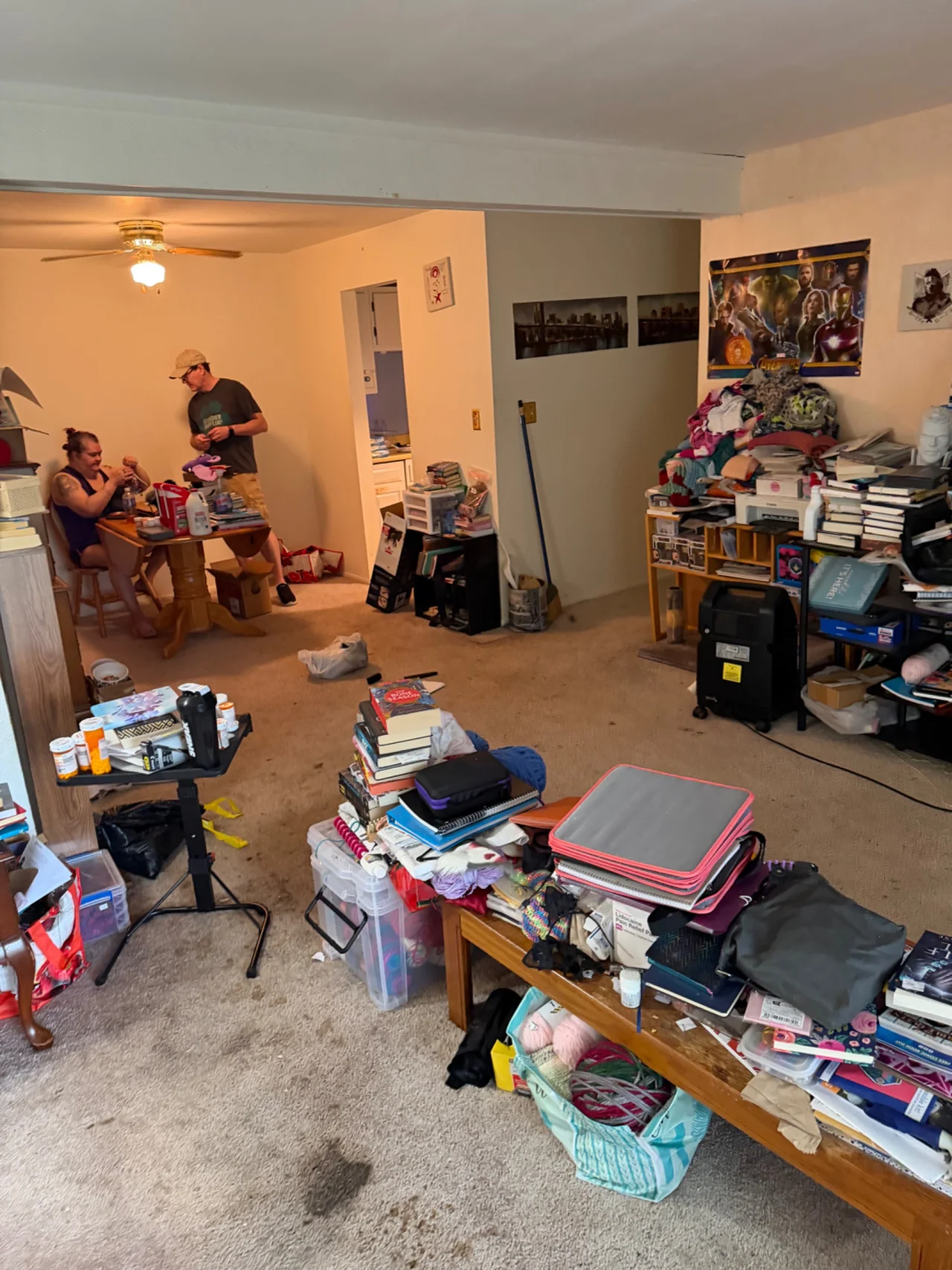
Living room with furniture and belongings remaining in the house
01

What we do

Tell us what to expect

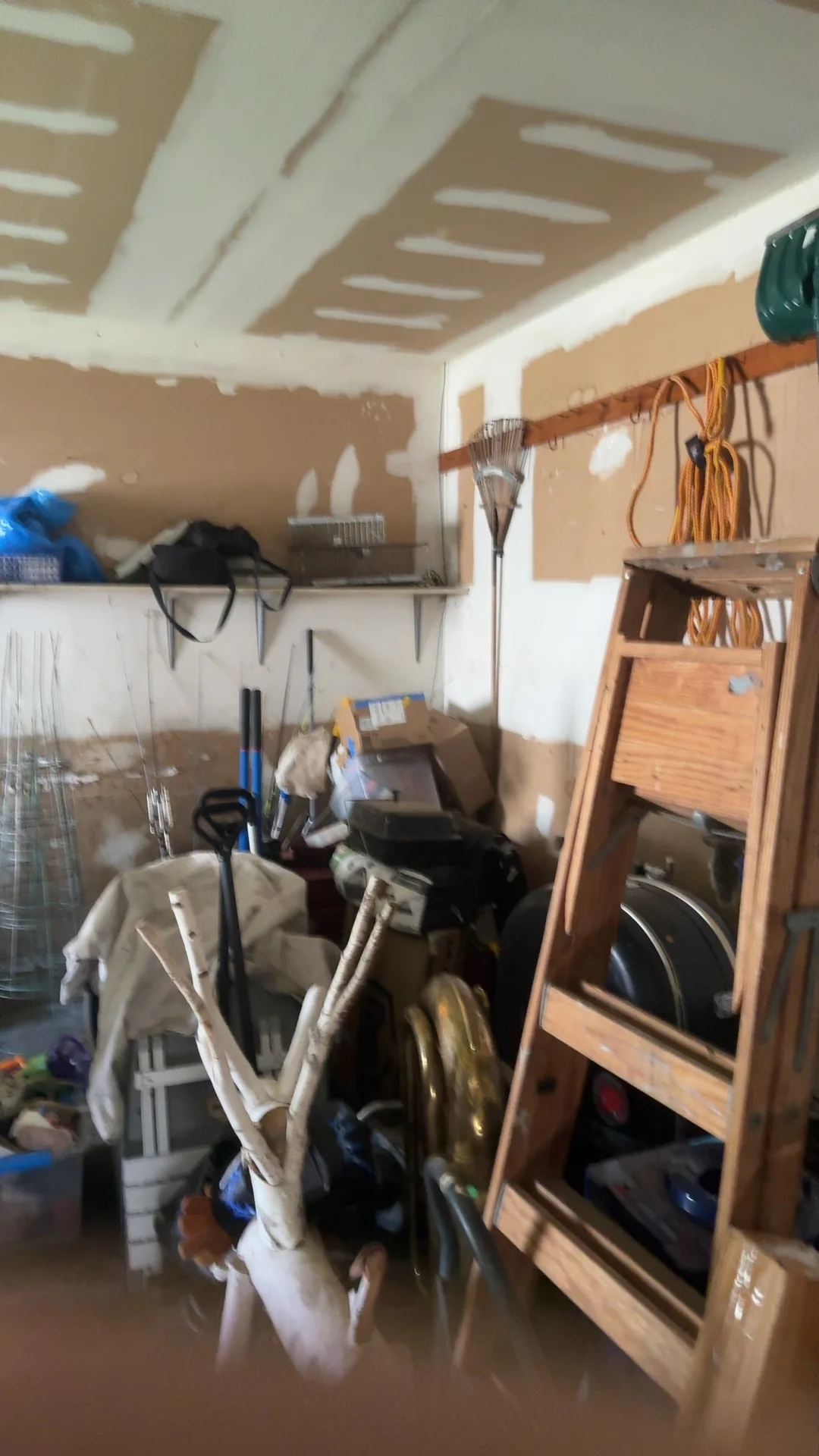
Garage with stored equipment and belongings

Biohazards, structural problems, pests, and blocked rooms do not automatically end the conversation. They do affect whether a visit is safe, what we can see, and whether a purchase is workable.

We focus on the condition of the house, safe access, and what may remain after the sale. Nobody needs the family story, and nobody will ask for it. A house gets this way for many reasons, and the person who finally calls about it is usually the one trying to help.

02

Safety first: what to say before anyone walks in

Some things in a heavily cluttered house can hurt the people who enter it. Tell us about any of these before the visit, even if you're not sure: animal or human waste, dead animals, spoiled food, used needles or medical waste, visible mold, or a smell that makes your eyes water. Those are biological hazards. We won't enter a room like that without the right protection, and you shouldn't either.

Weight is the other hazard. Stacked paper, books, magazines, and boxes are heavy, and a floor that has carried them for years can sag, bounce, or feel soft, especially over a basement or crawl space. If a floor feels wrong, say so, and don't ask anyone to walk it to prove a point. Blocked doors and windows matter for the same reason: a room with one way out is a room nobody should spend long in.

Utilities are the third. If the furnace, water heater, or electrical panel is buried, if there are extension cords running under piles, if you smell gas, or if the water has been off and nobody knows what's leaking, tell us. If you smell gas, leave and call the gas company before anything else. None of this is a reason not to call us. It is the list of things we need to know to plan a visit that doesn't put anyone at risk.

03

Start with safe, authorized access

Tell us which areas can be reached safely before the visit. The owner or someone with permission must provide access. If the owner is a parent who can't manage the house anymore, the person helping may need a power of attorney, a guardianship order, or, after a death, letters of office from the probate court before they can sign anything; the owner's attorney and the title company will say which. If you're not sure what you have, ask the owner's attorney first.

The visit may be limited if rooms are blocked or unsafe, and a visit does not guarantee an offer. One walk-through of what can be safely seen is usually enough for us to decide; we don't need every room opened, and we don't need the contents moved for the visit.

04

Animals in the house: what Illinois law says

When there are many animals in a house, two things are going on: the animals' welfare and the people's. Illinois's Humane Care for Animals Act sets an owner's duties for every animal: a sufficient quantity of good quality food and water, adequate shelter and protection from the weather, veterinary care when needed to prevent suffering, and humane care and treatment. The Act also defines a companion animal hoarder as a person who possesses a large number of companion animals, fails or is unable to provide what Section 3 of the Act requires, keeps them in a severely overcrowded environment, and displays an inability to recognize or understand, or a reckless disregard for, the conditions the animals are living in and the impact on the animals' and the owner's health and well-being.

If an approved humane investigator finds a violation, the Act says the investigator furnishes the owner a notice of violation stating what action is necessary to comply, and that a maximum of 48 hours may be granted to take corrective action. If the owner fails or refuses, the investigator asks the Department of Agriculture for authorization to impound the animals. In a life-threatening situation, emergency impoundment is allowed. A notice of impoundment tells the owner how to request a hearing.

For a seller, the practical points are these. Live animals need a plan before closing, and animal control, a humane society, or a rescue is the right call for rehoming them, not a buyer. A house that held many animals often has waste soaked into subfloors and drywall and an odor that doesn't leave with the animals. We buy houses in that condition. Tell us how many animals, of what kind, for how long, and whether animal control has already been involved, and we'll plan the visit around it.

05

Unsafe-building notices, condemnation and demolition: what a city can do

Property maintenance codes, unfit-for-habitation findings, and condemnation notices are local. Each Illinois city and village enforces its own code with its own notices, hearings, and deadlines, and a county may act in smaller towns. We don't describe any one city's process here; read the notice you received, call the number on it, and send a copy to us, your attorney, and the title company.

What the state statute gives every municipality is this: the Illinois Municipal Code lets a city demolish, repair, or enclose dangerous and unsafe buildings, or uncompleted and abandoned ones, and remove garbage, debris, and other hazardous, noxious, or unhealthy substances or materials from them. To do it, the municipality applies to the circuit court for an order after the owner and lienholders of record have had at least 15 days' written notice by mail and have not put the building in a safe condition or demolished it, or for an order requiring the owner to demolish, repair, or enclose the building or remove the garbage and debris. The court expedites the hearing. The municipality's cost of doing the work, including court costs and attorney's fees, is recoverable from the owner and becomes a lien on the real estate if the municipality records a notice of lien within 180 days.

The statute also has a faster track for a building of three stories or less that the city's building official determines is open and vacant and an immediate and continuing hazard to the community: a notice posted on the front of the building, then within 30 days a certified-mail Notice to Remediate to the owners and lienholders of record and a published notice, before the municipality may demolish, repair, enclose, or clear the building itself.

What that means for a seller: a notice is a clock, not a verdict. The fast track applies to a building the official finds open and vacant; a house someone lives in isn't vacant. Under this statute, the owner gets notice before the municipality acts. A notice from the city doesn't by itself stop a sale; the title company will want it resolved, released, or accounted for in the contract. Share it early. Our code violations page covers how an open notice fits into an as-is sale.

06

What the Illinois disclosure report asks

If you've lived in the house, Illinois's Residential Real Property Disclosure Act requires the seller to complete every item in the state's disclosure report and deliver it to the buyer before the contract is signed. It is a set of yes-or-no statements about what you're aware of: flooding or recurring leakage in the basement or crawl space, material defects in the foundation, roof, walls, floors, electrical, plumbing, heating, or septic, unsafe concentrations of radon, asbestos, or lead, current infestations of termites or other wood-boring insects, and whether you've received a notice of violation of local, state, or federal laws relating to the property that hasn't been corrected. Answering "yes" doesn't stop a sale; it tells the buyer what to expect. Our guides cover what to disclose when selling a house in Illinois and whether you have to disclose pests.

If you've never lived in the house, the form has a place to say what your relationship to the property is, and some sellers, such as an estate's representative, are exempt from the report altogether. The exemption covers the form, not the conversation: tell us what you know, and the contract will say what the buyer takes as-is.

07

No public listing photos are needed

A direct-sale visit does not require photographs for a public listing. If we need photos to understand access, safety, or cleanup, ask what will be photographed and who will receive the images. No sign goes in the yard, and no listing goes online.

A heavy cleanout can take real money and coordination, and a cleaned-out house is still a house that needs repairs. Before hiring anyone, compare that path with a written as-is offer that clearly states which contents are included. The contract can say the family takes what it wants and everything else stays, and that is the whole cleanout.

08

How an as-is sale of a cluttered house works

It starts with the address, who owns the house and who's helping, what's inside, and the safety list above. Then one scheduled walk-through of what can be safely seen. Set aside anything the family wants to keep, or tell us where it is and we'll leave those rooms alone on the visit.

Next comes a written offer: the price, earnest money, which contents stay, who pays which closing costs, and a closing date that fits the family and any notice the city has sent. We put "all contents remaining in the house convey" in writing when that's what you want, so nobody has to come back for the last load. Review it with your attorney; the title company then searches the title and sets the closing.

At closing you sign, the proceeds are paid, and the house, and what's inside it, is ours. If the house is also vacant, inherited, or has an open city case, those pages cover the rest. If what you need most is a plain conversation about a house nobody has been able to deal with, that's what we're for.

No repairs. No cleanup.

  • As-is
  • No showings
  • You pick the closing date.

What sellers say

Swipe to see all 3

  • 1 of 3

    “We had an excellent experience selling our home in McHenry County, IL. [He] was professional, made the selling process easy and was true to his word. I highly recommend this company.”

    Alison M.January 2026Google
  • 2 of 3

    “…No pressure experience, super easy, and he offered me a great deal. I would happily recommend him to anyone looking to sell.”

    Matthew P.November 2025Google
  • 3 of 3

    “…He is very knowledgeable and so easy to work with if you’re looking to sell your home seamlessly and worry free.”

    Jan G.July 2026Google

Google reviews from sellers whose houses our owner bought, posted on the Google listing of his earlier home-buying business. “…” marks a shortened quote; [He] stands in for his name.

Common questions

Common questions about the sale.

  • Is the house too far gone?

    We cannot know without seeing the house. Severe clutter, biohazards, structural problems, pests, or blocked access can change what is safe and workable, but you do not need to clean before starting the conversation. One walk-through of what can be safely seen is usually enough for us to answer.

  • Do I have to clean out the house before you'll buy it?

    No. We buy houses as-is with the contents inside, and the contract can say that everything remaining conveys to the buyer. Take what the family wants to keep. If a room can't be entered safely, tell us and we'll work around it rather than ask you to clear it.

  • Will the condition of the house be judged?

    No. The conversation is about the house and safe access, not the person or the family behind it. You don't have to explain how it got this way, and nobody on our side will ask. Houses get this way for many reasons, and the person who calls about one is usually the one trying to help.

  • Can we just let you in and not explain?

    Yes, with one exception: identify known hazards, occupants, unsafe areas, and access limits before anyone enters. That's about safety, not the story. The owner or another authorized person must approve access, a visit can be limited to the rooms that are safe, and a walkthrough does not guarantee an offer.

  • Is it safe to go in?

    We can't say from a phone call. Waste, mold, needles, spoiled food, a soft floor, a blocked exit, buried utilities, or a gas smell each change the answer. Tell us what you've seen and we'll plan the visit around it. If you smell gas, leave and call the gas company first.

  • There are a lot of animals in the house. What happens?

    Live animals need a plan before closing, and animal control, a humane society, or a rescue handles rehoming, not a buyer. Illinois's Humane Care for Animals Act sets an owner's duties and a notice-and-correction process. We buy houses with animal damage. Tell us how many, what kind, and for how long.

  • The city posted a notice, or says the house is unsafe or condemned. Can it still be sold?

    A notice doesn't by itself stop a sale. Each city's code and process is its own, so read the notice and call the number on it. The Illinois Municipal Code requires notice to the owner, with a deadline to act, before a municipality demolishes or repairs an unsafe building. Send the notice to us, your attorney, and the title company.

  • Do you buy houses that have been in the family for decades?

    Yes. Length of ownership and the amount of contents do not decide the answer by themselves. Safe access, hazards, condition, title, and the work ahead determine fit. Do not clean out the house before the initial review unless safety or a legal obligation requires it.

  • What if there's mold, pests, or animals?

    Disclose them before anyone enters. They affect safe access, insurance, remediation, price, and whether we can go ahead, but they don't end the conversation. Do not enter or disturb an unsafe area solely for a walkthrough. If you've lived in the house, the disclosure report asks about infestations and known defects.

  • My parent still lives there and won't leave. Can you help?

    We can only buy from the owner or someone with legal authority to sign for them, and a sale doesn't settle where your parent will live; that comes first. If your parent owns the house, the decision is theirs. If they can't make it, the path runs through a power of attorney or a court order, with an attorney.

  • Will you tell my neighbors or family anything?

    No. A direct-sale conversation does not require a yard sign, a listing, or an open house, and we don't contact neighbors or relatives. We share property details only as described in the privacy policy and when they're needed for an offer or the closing, such as with the title company.

  • Can you handle a walkthrough without disturbing my ill parent?

    Raise that before scheduling. A quiet, limited visit, a visit while they're at an appointment, or another arrangement may be possible, but the occupant's permission, their health and safety, lawful access, and enough information for us still matter. Tell us what would make it easier.

Illinois law referenced on this page

  • Illinois Municipal Code, demolition, repair, enclosure, or remediation of dangerous and unsafe buildings: notice, court order, lien, and the open-and-vacant fast track (65 ILCS 5/11-31-1)
  • Humane Care for Animals Act, owner's duties (510 ILCS 70/3)
  • Humane Care for Animals Act, definition of companion animal hoarder (510 ILCS 70/2.10)
  • Humane Care for Animals Act, definition of companion animal (510 ILCS 70/2.01a)
  • Humane Care for Animals Act, notice of violation and corrective action (510 ILCS 70/11)
  • Humane Care for Animals Act, impounding animals and notice of impoundment (510 ILCS 70/12)
  • Residential Real Property Disclosure Act, the seller completes and delivers the report before the contract is signed (765 ILCS 77/20)
  • Residential Real Property Disclosure Act, the disclosure report form (765 ILCS 77/35)
  • Residential Real Property Disclosure Act, exempt transfers (765 ILCS 77/15)

Related situations

  • Sell as-isStart with the house in its current condition. No repairs or listing preparation before you ask for an offer.
  • Inherited houseStart before probate or the family cleanout is finished.
  • Vacant propertyOut-of-state owners can start with the address, property details, and an access plan.
  • Code violationsShare the city notice or association letter early so we can account for deadlines, repairs, and costs.
  • Needs major repairsAsk for an offer before deciding what to repair. Share any reports or estimates you already have.

A simple first step

Ready to talk about the house?

In any condition.

Start with the property address and tell us a little about the house. We will explain what happens next.

Prefer to talk?

Call 224-219-0970
Tell us about the house

✓Start with the address. You are not agreeing to sell by sending it.

AS-ISHOUSE BUYERSof Chicagoland

Local cash home buyers serving Elgin and Chicago's northern and western suburbs.

Company

  • About
  • How it works
  • Contact
  • FAQ
  • Guides

Ways we can help

  • Inherited house
  • Foreclosure
  • Sell as-is
  • House with heavy clutter
  • Divorce sale
  • Rental property
  • Needs major repairs
  • Fire or water damage
  • Vacant property
  • Behind on payments
  • Behind on property taxes
  • Code violations
  • Relocating
  • All situations →

Service area

  • All service areas
  • Sell house fast
  • Sell a house as-is

Contact

  • 224-219-0970
  • hello@asischicagoland.com

As-Is House Buyers of Chicagoland

2250 Point Blvd, Suite 335, Elgin, IL 60123

Office hours: Monday–Friday, 9:00 AM–5:00 PM

Serving Elgin and the surrounding Northern Illinois suburbs.

A cash offer may be lower than what a house could sell for on the open market. Compare your options, read the agreement carefully, and talk with your own attorney or a licensed real estate professional before signing if you wish.

© 2026 As-Is House Buyers of Chicagoland. All rights reserved.

  • Privacy
  • Terms
  • TCPA consent
Call